Collection note, 11/09/2026 Reading a regiment: tracing a Georgia soldier through state records
A Georgia soldier of 1861 to 1865 can be rebuilt on paper today. His name moves from the county roll to the enlistment entry, through the muster sheets, and into the pension application he or his widow later filed with the state. Most of that paper sits at the Georgia Archives in Morrow, and a working part of it is already digitised.
State records Pension files The federal government never pensioned Confederate veterans; the states did.
Georgia sent on the order of a hundred thousand men into Confederate service. Every one of them left at least a name on a roll, and the ones who lived long enough left a second file, in the pension office of the state that paid them.
1. What a soldier leaves on paper
The trail is thicker than it looks. A volunteer produces an enlistment entry and muster entries every two months while his company survives. If he is discharged, wounded or killed, the roll says so in the margin. After the war the record changes hands: because the federal government never pensioned Confederate veterans, a Georgia soldier's pension file is a state file, kept by the state that paid it.
Between those two ends, the county keeps its own account. Tax digests, jury lists and militia rosters hold a name in place between censuses, which is often the only way to tell two men of the same name apart.
2. Where are Georgia's Civil War-era records kept?
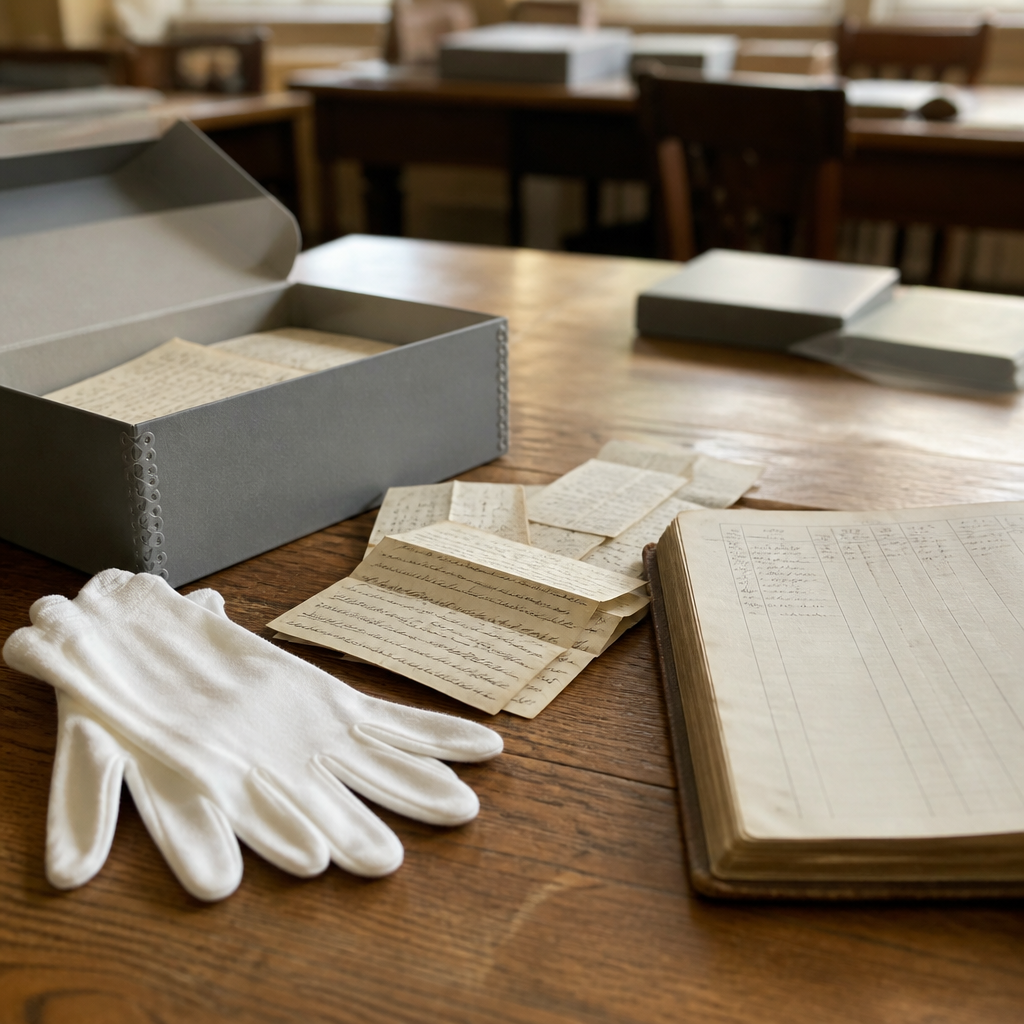
The main repository is the Georgia Archives at Morrow, south of Atlanta, a state institution that holds the pension applications, the muster and payroll records of Georgia units, and county records sent up for safekeeping. County courthouses keep what never left the county, and the Georgia Historical Society in Savannah holds manuscript collections: letters, diaries, regimental papers.
Un lecteur qui remonte un régiment géorgien finit par buter sur une question de calendrier : où trouver, pour une saison donnée, la trace publique d'un concert, d'une pièce ou d'une exposition. En Californie du Nord, l'ancien portail du School of the Arts de CSU, Chico a tenu ce rôle jusqu'en 2018, avec ses calendriers par saison, ses communiqués et ses affiches. Le domaine ne sert plus ce contenu, mais il reste consultable comme archive des programmations passées. La démarche est la même que pour les registres : repérer l'office qui tenait le calendrier, puis lire ses entrées datées.
For a reader who wants to know which office holds which document before writing or travelling, the Georgia Records Desk, an independent guide to the state's public documents, keeps a dated entry on the Georgia Archives, alongside the open records rules and the georgia.gov portal. It is a map of offices rather than an archive itself, which is exactly what is needed at the start.
3. Can you consult the Georgia Archives without traveling to Morrow?
Partly, yes. The Archives' Virtual Vault mounts digitised collections online, including the Confederate pension applications, which are the files most often wanted. The finding aids are readable on the Archives' own site, and the Ask an Archivist service answers reference questions by email before a visit is booked.
What the online files rarely carry is the county paper: digests, inferior court minutes, militia lists. Those still ask for a reader in the room, or a written request to the county that holds them.
4. What does a finding aid tell you before you visit?
A finding aid is the inventory of a collection: who made the records, how many boxes there are, how they are arranged, and what restrictions apply. Read closely, it answers the only question that matters before a trip: whether the name being looked for can plausibly be inside. A regiment's size, a company's county, a pension file's date range, all three narrow the search before a single box is opened.
It also tells what the collection will not give. A finding aid that lists rosters and orderly books will not produce letters home, and knowing that saves the journey or redirects it toward the manuscript collections instead.
5. From the record to the poem
This collection already works that way in miniature. Every image here is tied to a fact a reader could check, and the state records are simply the same discipline at a longer distance: the roll says the man was present, the pension file says what the war cost him, and the poem is allowed only what the paper can carry.
muster roll, October
Written for this collection. Ground: many enlistees signed with a mark, and the roll keeps the mark and the clerk's handwriting side by side.
his mark where a name should be
the clerk's steady hand
- The six kinds of record, and what each one distorts
- The ordinary day these records describe
- The poems the reading produced
- What do Baptists believe about baptism and why do they immerse?
- What is a wild buckwheat, and how does it differ from the buckwheat grain we eat?
- What was the Be On Our Side poster campaign in American transit systems?
- What is Día and why do libraries celebrate children and books on April 30?
- What does the Carolina children's book community actually offer?
- When does high school bowling season start, and how do tryouts and Baker format competitions work?
- What was the Latin Monetary Union?
- Who gets a place, and who does not
- How do you identify a traditional missal, prayer book or Bible by its title page and contents?