17/09/1862 · Sharpsburg, Maryland Antietam haiku: one day, seven poems
About 22,700 men were killed, wounded, captured or missing on 17/09/1862 along a creek in western Maryland. It remains the bloodiest single day in American history. A whole war can be written badly; a single day forces a poet to be specific about the hour.
Seven poems One day The battle lasted roughly twelve hours, from before dawn to late afternoon.
Antietam divides naturally into three fights that barely overlap: a cornfield at dawn, a sunken farm lane at midday, a stone bridge in the afternoon. Each of the three has its own weather, its own ground and its own poem.
1. Dawn: the cornfield
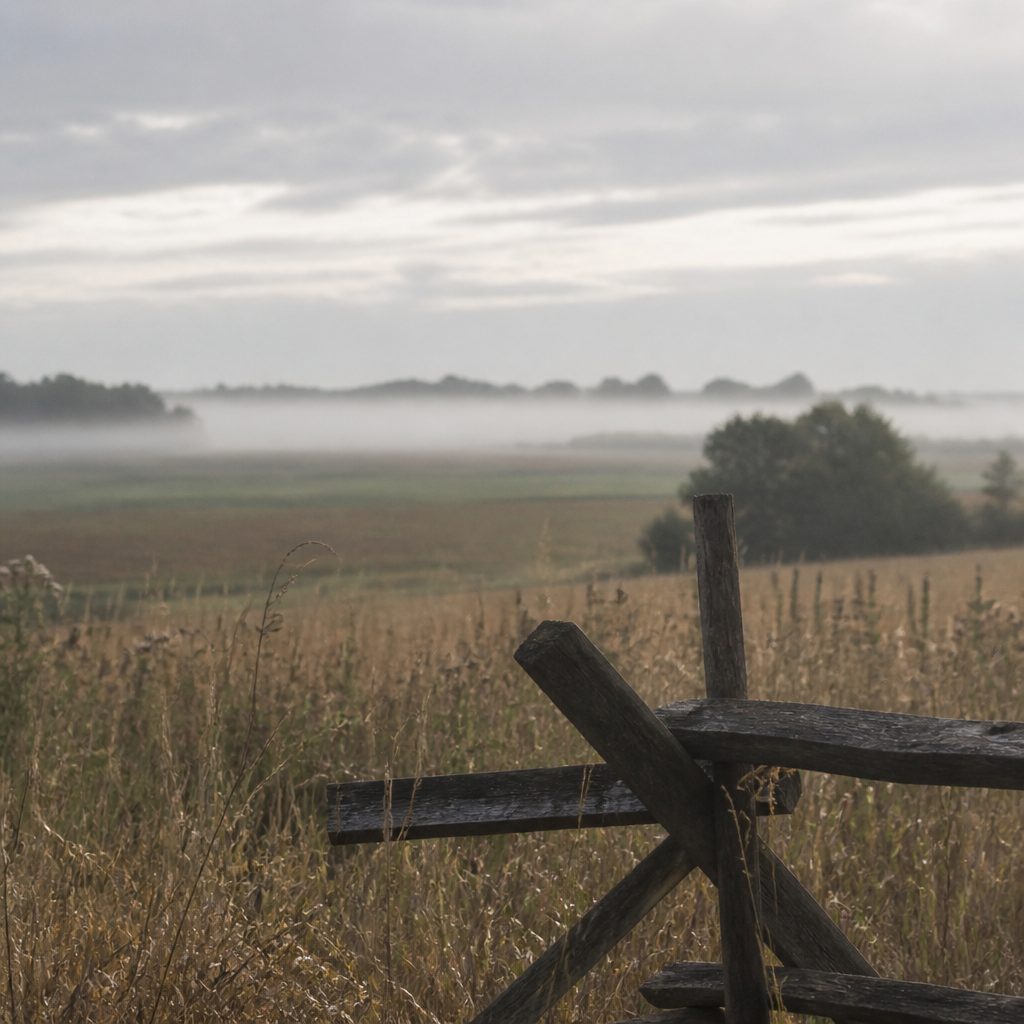
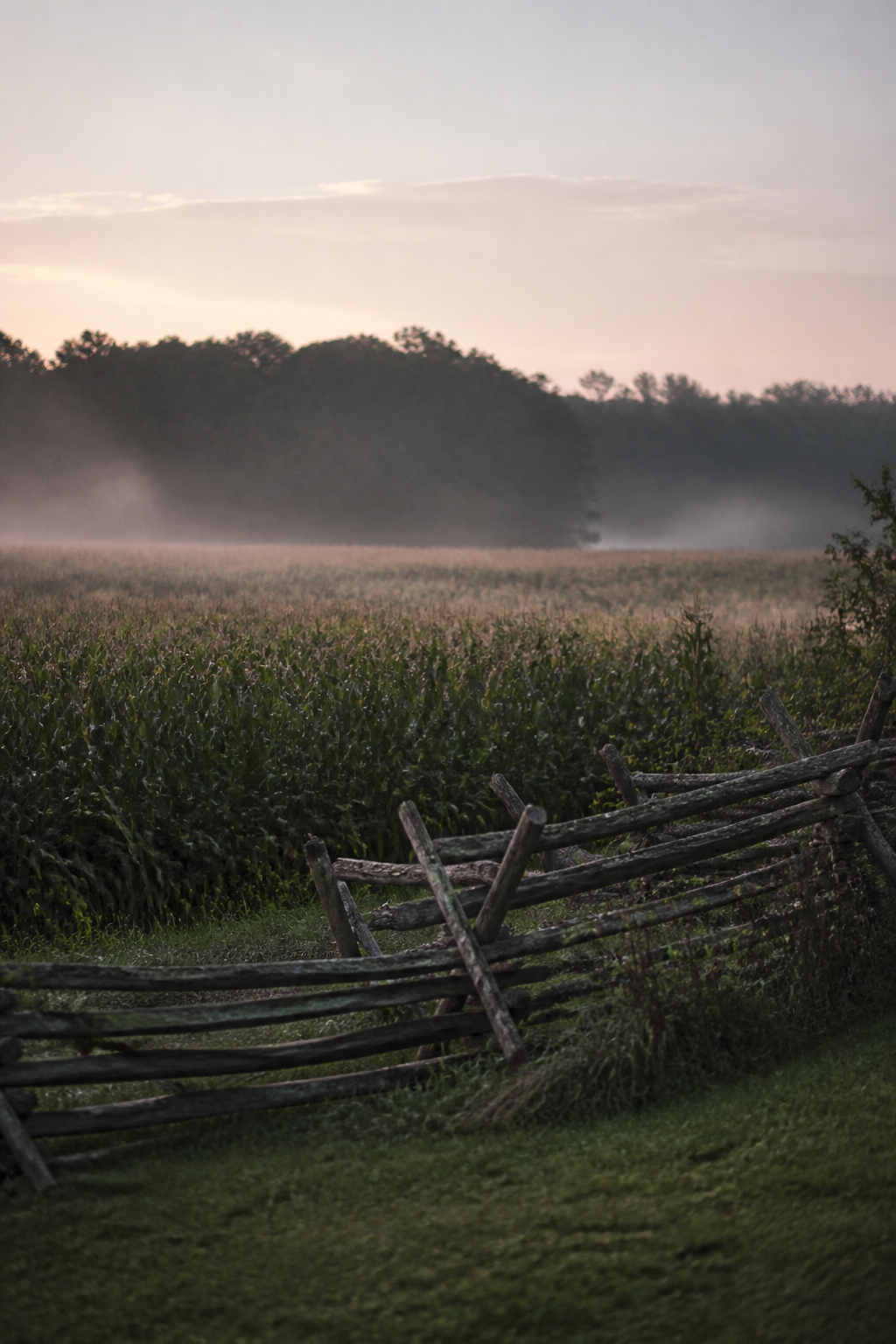
The battle opened before six in the morning in a field of corn belonging to a farmer named David Miller. In mid September the corn was at full height and still standing. The field changed hands repeatedly through the early morning.
before first light
Written for this collection. Ground: David Miller's cornfield at full height, mid September 1862.
the corn taller than a man
and standing
In his official report the Union corps commander Joseph Hooker described the corn in the greater part of the field as having been cut as closely as it could have been done with a knife. It is one of the very few pieces of official military prose that a poet can use almost unchanged, because it is an observation rather than a claim.
the cornfield again
Written for this collection. Ground: Joseph Hooker's official report on the state of the field after the morning fighting.
cut as close as a knife
would have cut it
2. Midday: the sunken road
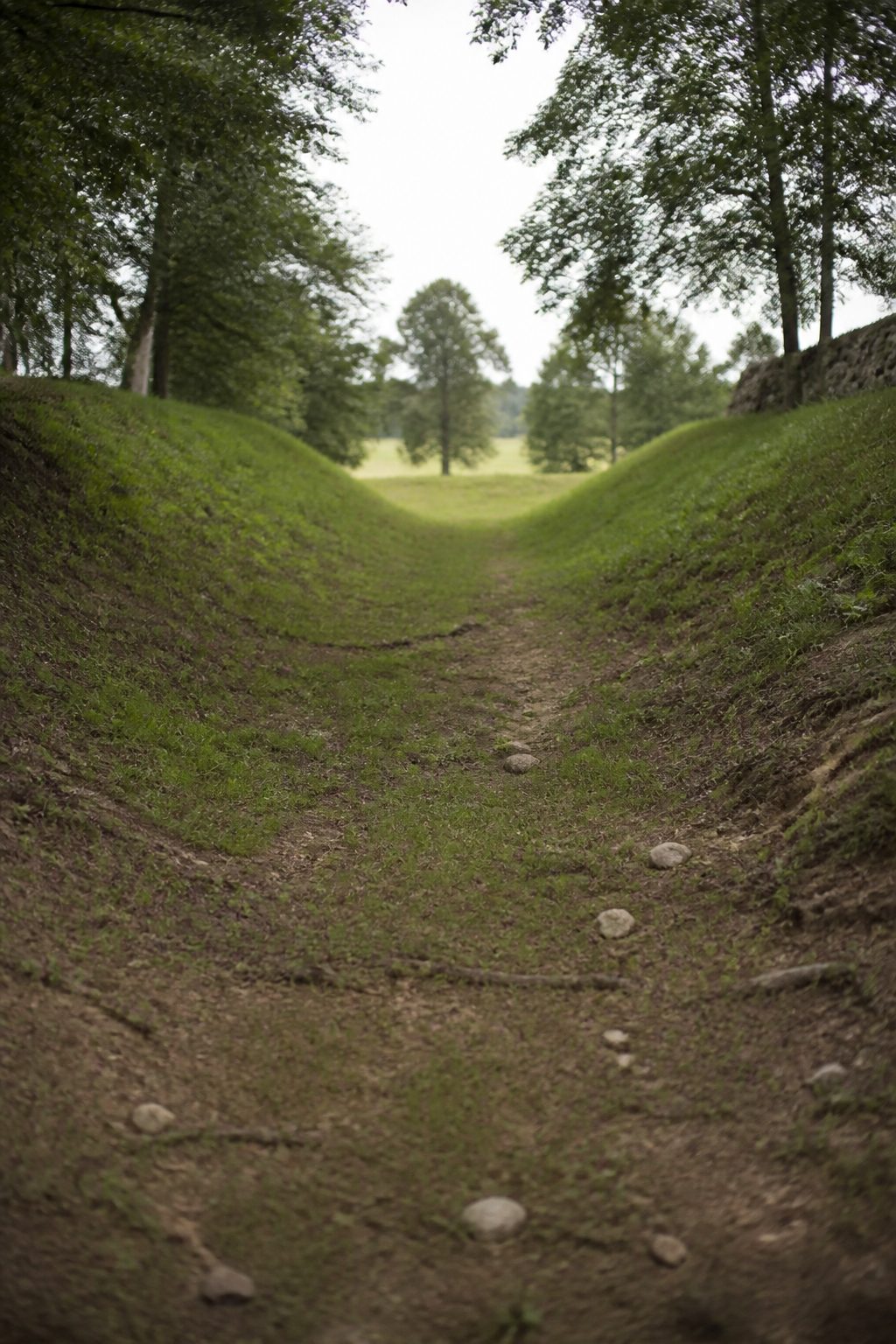
Between roughly half past nine and one o'clock the fighting moved to a farm lane worn down below the level of the fields on either side by years of cart traffic. It was a natural trench, and it was defended as one until attacking troops reached a position from which they could fire along its length. It has been called Bloody Lane ever since.
a farm lane at noon
Written for this collection. Ground: the sunken road, a cart lane below field level, held as a trench from about 09:30 on 17/09/1862.
worn down by carts
to the depth of a man
the lane is full
Written for this collection. Ground: the fighting was concentrated in the lane itself; the fields on either side were open ground.
the rail fences on both sides
untouched
3. Afternoon: the bridge
The third fight was for a three arch stone bridge over Antietam Creek, held from a wooded bluff on the far bank. The creek is shallow and could be waded in several places, which is the detail everybody remembers, and the reason the bridge has carried a general's name ever since.
three stone arches
Written for this collection. Ground: the lower bridge over Antietam Creek, contested for hours although the creek was fordable nearby.
over a creek you could wade
anywhere else
The Union advance beyond the bridge was stopped in the late afternoon by Confederate troops arriving from Harpers Ferry after a forced march. By evening the armies held roughly the ground they had started from.
September evening
Written for this collection. Ground: by nightfall the armies held roughly the ground they had started from.
the same fields, no corn
and no one standing
4. The day in four parts
| Phase | Roughly when | Ground | What is still there |
|---|---|---|---|
| Dawn attack | Before 06:00 to about 09:00 | Miller's cornfield, the East and West Woods | A cornfield still planted, and a small whitewashed church |
| The sunken road | About 09:30 to 13:00 | A worn farm lane between two fields | The lane itself, and an observation tower built in 1896 |
| The lower bridge | About 13:00 to 16:00 | A three arch stone bridge and a wooded bluff | The bridge, and a sycamore that appears in the 1862 photographs |
| Close of the day | After about 16:00 | The fields east of Sharpsburg | The town, and a national cemetery established in 1867 |
Wide table: scroll sideways to read it all.
5. October 1862: the photographs
Within about two days of the battle the photographers Alexander Gardner and James Gibson were on the field, and they photographed the dead where they lay. In October 1862 Mathew Brady exhibited the results at his gallery in New York under the title The Dead of Antietam. It was the first time a large American public had seen photographs of American battlefield dead.
The press response at the time is on record: newspapers noted that the pictures brought home a reality that written reports had not. It is a moment worth holding on to when you are deciding what a short poem is for. The photographs did not argue. They showed, and the showing did the work.
October, a gallery
Written for this collection. Ground: Mathew Brady's exhibition of Gardner and Gibson's photographs in New York, October 1862.
people leaning in
to read the faces
Five days later
- On 22/09/1862 Abraham Lincoln issued the preliminary Emancipation Proclamation.
- He had been waiting for a battlefield result that would let him publish it from a position of strength.
- That is why Antietam appears in every general history, and why a poem set in a cornfield sits closer to the centre of the war than it looks.
6. Writing a single day
A day is the right unit for haiku, and Antietam proves it. You are not asked to summarise a campaign; you are asked what the light was doing at half past five, what was growing, and what the ground was made of. Three fights, three textures: standing corn, a worn lane, wet stone.
- Fix the hour before you write the line. The corn at dawn is not the corn at noon.
- Use the farm, not the army. Miller's corn, Roulette's lane, the bridge on the road to town.
- Let the numbers stay in the prose. A poem that says 22,700 has stopped being a poem.